Consulate, Marcos agents linked to espionage case (1975)
Certain important documents went missing at a Los Angeles conference in 1975 organized by anti-Marcos Fil-Ams and Filipinos in America.

Bantayog ng mga Bayani Foundation launches this digital library archive section in its website, with the publication Signs.
Signs was circulated during the final years of the Marcos dictatorship and had a total of 37 issues before it morphed into another form. Other publications circulated at this time were the We Forum, Malaya, Veritas, Mr and Ms, Sic of the Times, and Who, the University of the Philippines’ Philippine Collegian, and the Catholic Church’s Various Reports, Signs of the Times and Ichtys, and the Task Force Detainees of the Philippines’ Update. They were later collectively called the “mosquito press,” because by their small bites they stretched and broke the limits of the regime’s censorship rules. The underground press, to which belonged mostly clandestine national and regional newsletters such as Ang Bayan and Liberation defied Marcos censors from day-one. They provided reliable information about events happening in the country in the midst of the regime’s efforts to ram its rosy propaganda down the people’s throats.
Bantayog acknowledges the courageous efforts of the people and groups behind these publications, who lived through their commitment often at the risk of loss of incomes, security, profitable careers, and worse, imprisonment or even death. They gave life to the people’s struggle for the right to a free press, free speech, and free expression under the brutal dictatorship.
Searchable versions of these publications that defied Marcos censorship will soon be available.
… There are some … so overcome by the darkness of their fears they cannot even sing; others sing to quiet the trembling of their heart. Still others … sing out of hope within their soul that light will soon come to conquer the dark. And then there are those – the exceptional ones – who sing because they care so much that darkness can never quench the light of their love: they are their own light and they dare the darkness to put it out.
~ (Jose W. Diokno, Fort Bonifacio, 1973, cited by Maria Serena I. Diokno in “Memory as a Means of Empowerment,” Memory, Truth-Telling and the Pursuit of Justice, 2001)
Lapit mga kaibigan at makinig kayo
Ako’y may dala-dalang balita galing sa bayan ko
Nais kong ipamahagi ang mga kwento at
Mga pangyayaring nagaganap sa lupang ipinangako
~ Excerpt from Balita, by Asin
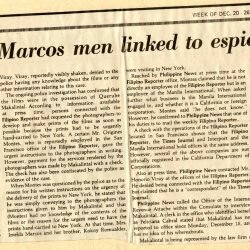
Certain important documents went missing at a Los Angeles conference in 1975 organized by anti-Marcos Fil-Ams and Filipinos in America.

The publication Signs was circulated during the final years of the Marcos dictatorship and had a total of 37 issues before it morphed into another form.

The publication Signs was circulated during the final years of the Marcos dictatorship and had a total of 37 issues before it morphed into another form.

The publication Signs was circulated during the final years of the Marcos dictatorship and had a total of 37 issues before it morphed into another form.

The publication Signs was circulated during the final years of the Marcos dictatorship and had a total of 37 issues before it morphed into another form.

The publication Signs was circulated during the final years of the Marcos dictatorship and had a total of 37 issues before it morphed into another form.
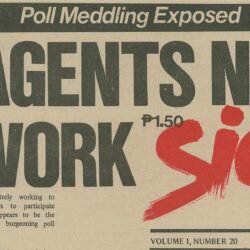
The publication Signs was circulated during the final years of the Marcos dictatorship and had a total of 37 issues before it morphed into another form.

The publication Signs was circulated during the final years of the Marcos dictatorship and had a total of 37 issues before it morphed into another form.

The publication Signs was circulated during the final years of the Marcos dictatorship and had a total of 37 issues before it morphed into another form.
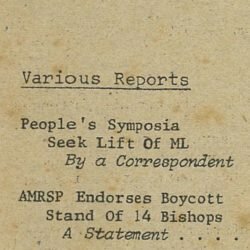
The Signs of the Times was published by the Association of Major Religioius Superiors in the Philippines (AMRSP). The articles and reports were intended for critical analysis and theological reflection of the religious and laymen whom the institution serve.